

The global project management landscape is undergoing a structural shift. What was once viewed as a supporting discipline is now central to how organisations deliver strategy, manage change and compete. Fresh data across software adoption, talent demand and delivery performance paints a clear picture: project management is expanding quickly, but maturity is not keeping pace.
At the centre of this growth is technology. According to research listed by Monday.com, the project management software market is forecast to reach $7.24 billion by 2025 and climb to $12.02 billion by 2030, reflecting a steady annual growth rate of 10.67%. This is not speculative investment; it is a response to operational pressure. Organisations are relying more heavily on structured workflows, cross-team collaboration and real-time visibility to deliver outcomes.
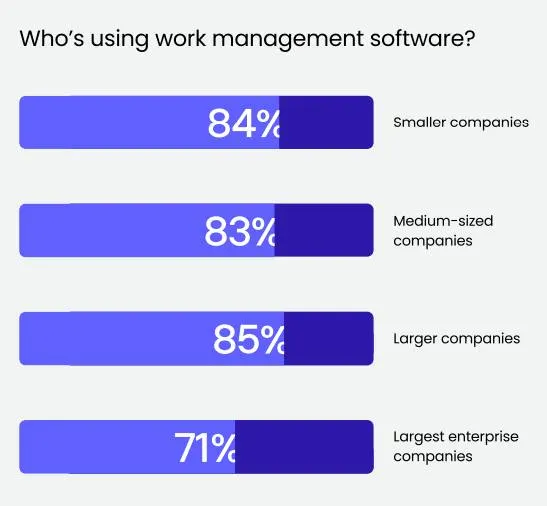
Adoption is already widespread. More than four in five companies now use work or project management tools to improve efficiency. Yet this rise in tooling brings complexity. Over half of employees report using more tools than they did a year ago, suggesting that many organisations are layering solutions rather than simplifying systems. Interestingly, smaller firms are adopting project tools at a higher rate than large enterprises, hinting at greater agility and fewer legacy constraints.



For project managers, the implication is clear. Tooling is no longer a differentiator; it is a baseline. The real value lies in how effectively these systems are integrated, governed and used to drive decisions.
A widening talent gap
Alongside software growth sits a more pressing concern: talent. There are currently around 40 million project management professionals worldwide, but demand is expected to outstrip supply by a significant margin. By 2035, an additional 30 million professionals will be needed to meet global requirements.
This gap is not evenly distributed. China alone is projected to face a shortfall of up to 13.6 million project professionals. In the United States, more than 426,000 project managers are already in employment, with steady growth forecast over the next decade.
Salaries reflect this demand. Median total compensation sits at around $136,000 annually, with top roles exceeding $180,000. Certification continues to play a role; professionals holding PMP credentials report higher earnings on average.
For organisations, this is a supply issue with strategic consequences. Competition for skilled project leaders will intensify, and retention will become as critical as recruitment. For individuals, the message is equally direct: capability development is not optional. It is the lever that drives both progression and earning potential.
The skills paradox
Despite rising demand, capability gaps remain stubborn. Only 45% of organisations provide accredited project management training, yet 71% acknowledge that their teams need stronger skills. This disconnect is one of the most revealing tensions in the data.

The impact is measurable. Organisations that prioritise soft skills achieve project success rates of 72%, compared to 65% for those that do not. Where soft skills are lacking, nearly half of project budgets are lost, and scope creep rises sharply.
Technical proficiency alone is not enough. Communication, stakeholder alignment and leadership discipline continue to determine outcomes. This is where many organisations fall short; they invest in tools and frameworks but underinvest in human capability.
For project managers, the lesson is straightforward. Mastery now sits at the intersection of technical execution and interpersonal skill. Those who can bridge both will remain in high demand.
Remote work, but not everywhere
Flexible working has reshaped much of the professional world, and project management is no exception. Around 61% of project professionals now work remotely at least part of the time. However, this headline figure masks significant variation.
Industries such as construction and manufacturing remain heavily tied to physical environments. In these sectors, the majority of project managers still work on-site, with only a small fraction operating fully remotely.
This divergence matters. It highlights that project management is not a single, uniform discipline. Context defines practice. A digital product team can iterate quickly with distributed stakeholders, while a construction project requires physical coordination, compliance and sequential planning.
Project managers must therefore adapt their approach to the environment rather than assume a universal model.
Governance is evolving, not settled
Organisations are still experimenting with how best to structure project oversight. While 82% now have a project management office, a quarter of these functions are less than two years old. At the same time, planned investment in PMOs has declined compared to previous years.
This suggests a period of reassessment. Some organisations are questioning whether centralised governance delivers sufficient value, while others are exploring more decentralised or agile approaches.
Compounding this is the fact that fewer than half of projects are led by formally trained project managers. In many cases, responsibility sits with functional leads who may lack structured training.
The result is inconsistency. Governance exists, but execution varies widely.
For project managers, this creates both risk and opportunity. Strong practitioners can bring clarity and discipline to environments that lack it, positioning themselves as essential rather than administrative.
Strategy is driving demand
Project management is no longer confined to delivery; it is embedded in strategy. Around 90% of organisations are undergoing some form of digital transformation, with project teams at the centre of that effort.
Beyond digital change, priorities include ESG initiatives, new revenue streams and operational resilience. Each of these requires coordinated programmes rather than isolated tasks.
This shift elevates the role of the project manager. The focus is no longer just on timelines and budgets, but on business outcomes. Understanding commercial context, aligning with strategic objectives and managing change are now core responsibilities.
Execution remains inconsistent
Despite increased investment, project performance remains uneven. Only a third of organisations consistently deliver projects on time and within budget. Just over a third fully realise intended benefits.
More concerning is the lack of measurement. Nearly half of organisations do not have access to real-time performance indicators, making it difficult to course-correct.
Basic disciplines are also missing. Only half of organisations consistently produce scoping documents or baseline schedules. Risk management is not universally applied.
These are not advanced capabilities; they are fundamentals. Their absence explains why many projects stall or fail.
For project managers, this reinforces the importance of discipline. Tools and frameworks are only effective when applied consistently.
A shift in methodology
Methodology is evolving, albeit gradually. Traditional predictive approaches such as Waterfall remain in use, particularly in sectors requiring strict control. However, their dominance is declining.
Agile adoption is growing, and hybrid models are gaining the most traction. Nearly a third of organisations now combine structured planning with iterative delivery, and this figure is expected to rise significantly.
The direction is clear. Flexibility is becoming the norm. Organisations want the control of traditional models alongside the adaptability of Agile practices.
Project managers must therefore be fluent across methodologies rather than tied to a single approach.
AI moves from promise to practice
Artificial intelligence is beginning to influence how projects are managed. The AI segment within project management is growing rapidly, with strong double-digit expansion forecast over the next few years.
Adoption is still emerging. Around one in five project professionals report frequent use of AI, yet expectations are high. Most senior leaders believe AI will reshape project delivery, and a growing number of practitioners are already using generative tools in their workflows.
The benefits are practical. Automation reduces administrative burden, improves reporting and supports faster decision-making. However, concerns remain, particularly around job security and the potential loss of meaningful work.
For project managers, the opportunity lies in augmentation rather than replacement. Those who learn to use AI effectively will increase their impact; those who ignore it risk falling behind.
What project managers should take from this
The data points to a profession at an inflection point. Demand is rising, tools are improving and the strategic importance of project management is clear. Yet capability gaps, inconsistent execution and evolving governance models create friction.
Three themes stand out.
First, fundamentals matter. Many organisations still struggle with basic planning, risk management and performance tracking. Mastery of these areas remains a competitive advantage.
Second, adaptability is essential. Whether in methodology, working environment or technology, rigid approaches are losing relevance. Versatility is becoming the defining trait of effective project managers.
Third, human capability remains decisive. Tools, AI and frameworks can enhance delivery, but they cannot replace leadership, judgement and communication.
The profession is growing, but growth alone does not guarantee success. The organisations and individuals who invest in capability, clarity and discipline will define the next phase of project management.