


Creator project management software – digital tools that help content creators plan, organize, and track projects – is emerging as a booming niche within the project management field.
A recent global market report from Research and Markets highlights that this sector is expanding at a remarkable pace, driven by the convergence of the growing creator economy and evolving work practices. Project management professionals should be aware of this trend, as it underscores shifting needs for collaboration and workflow tools tailored to creative content production.
Market Growth Overview
The creator project management software market has grown rapidly in the past few years. It expanded from $2.61 billion in 2024 to an expected $3.05 billion in 2025, reflecting a compound annual growth rate (CAGR) of 17.1%. Key factors behind this historic growth include widespread adoption of cloud-based solutions, a rising need for collaborative content creation across teams, and the expansion of the freelance/gig workforce in creative fields. These drivers have increased demand for tools that enable efficient content planning, cross-functional teamwork, and remote project coordination.



Looking ahead, the market’s trajectory continues upward. Forecasts project the sector to reach $5.66 billion by 2029, growing at a CAGR of 16.7%. This strong outlook is fueled by increasing investment in creator-economy tools, greater integration of project management platforms into creative workflows, and an emphasis on multi-platform project management (managing content projects across YouTube, Instagram, podcasts, etc.). Industry analysts also note emerging trends such as advancements in cloud computing, real-time collaboration features, and user-centric design innovations that make creative project tools more intuitive.
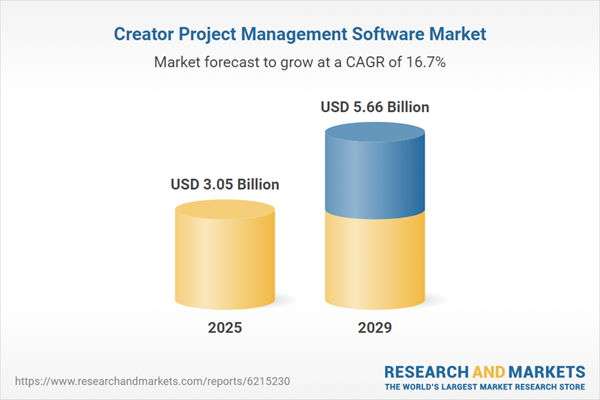
Figure: Global Creator Project Management Software Market Growth (2025–2029). The market is forecast to rise from $3.05 billion in 2025 to $5.66 billion in 2029, at a CAGR of 16.7%. This illustrates the robust expansion expected in this sector, driven by the creator economy’s growing needs and technology investments.
Key Drivers Fueling Expansion
Surging Digital Content Consumption
An explosion in digital content consumption is a crucial driver behind the market’s growth. With more people streaming videos, scrolling social media, and engaging with online content than ever, creators face pressure to produce and manage a constant flow of high-quality material. For instance, UK adults spent an average of 4 hours 20 minutes online per day in May 2024. Younger demographics are especially active – 57% of UK individuals aged 16–24 reported sending disappearing snaps on Snapchat, with similarly heavy use of other social apps. This surge in screen time and content engagement translates into soaring demand for efficient content planning and collaboration tools. Creator project management platforms allow teams to organize publishing calendars, coordinate multimedia production, and ensure timely content delivery, thereby helping creators meet the rising audience demand for fresh content.
Rise of Hybrid Work Models
The widespread adoption of hybrid work models – where teams split time between remote and in-office work – is further propelling this market’s growth. Organizations worldwide are balancing employee flexibility with the need for cohesive teamwork, driving them to seek specialized software that can maintain seamless collaboration across distributed environments. In the UK, the proportion of working adults in hybrid work arrangements climbed from about 28% in early 2023 to 30% by early 2024, reflecting steady uptake of flexible work. This trend boosts demand for creator-focused project management tools that enable real-time coordination, task tracking, and communication for creative projects regardless of team members’ locations. Such software ensures that whether a video editor is working from home or a graphic designer is in the office, they can collaborate on content tasks without missing a beat.
Cloud Collaboration and the Freelance Economy
Other growth drivers include the broad shift to cloud-based project management and the expansion of the freelance creator workforce. Cloud-based solutions have made it easier for creative teams to access project boards, asset libraries, and updates from anywhere, simplifying cross-team collaboration. Meanwhile, the rise of the gig economy means more independent creators and freelancers are involved in content production. These dispersed contributors benefit from centralized project platforms to organize their work and client deliverables. The market’s historic growth has been attributed to factors like cloud solution adoption, cross-functional content collaboration needs, and the expanding freelance/gig workforce all increasing reliance on dedicated project management software. In essence, as content creation involves more people with varied roles (writers, designers, video producers, marketers), the necessity of a unifying project management hub becomes clear.
Technological Trends and Innovations
Innovation in software is accelerating to meet the complex needs of content projects. Major trends shaping the sector include advancements in real-time collaboration tools, which allow multiple creators to edit and comment on projects simultaneously, and improved cross-platform integration that lets project managers oversee content across various channels in one place. There is also a strong focus on user-centric design – simplifying interfaces and customizing workflows to suit creative professionals, who may not have formal project management training but need easy-to-use organizational tools.
Another cutting-edge development is the integration of AI-powered assistants into creator project management software. These AI features help automate repetitive tasks and provide intelligent support tailored to different user roles. For example, in 2023 the platform ClickUp introduced “ClickUp AI,” a role-based assistant with 100+ specialized AI tools that can draft content, summarize documents, convert spoken ideas into task lists, and even prioritize work items. Such tools leverage artificial intelligence to boost productivity – e.g., a marketing manager can use AI to generate a social media post outline, or a project lead can get an instant summary of a long content brief. By streamlining content workflows and reducing manual effort, these innovations free creators to focus more on the creative aspects of projects while ensuring nothing falls through the cracks.
Leading Players and Regional Insights
The creator project management software space is teeming with established companies and startups vying to provide the best solutions for creative teams. Leading vendors include familiar project management and collaboration names such as OpenText Corporation, Atlassian Plc (makers of Trello and Jira), Monday.com, Asana, and newer entrants like Notion, Miro, ClickUp, and Airtable, among others. Each of these players contributes to the sector’s dynamism by introducing features tailored to content creation – from visual task boards and editorial calendars to asset review workflows and client feedback portals.

Geographically, the market’s growth is widespread. North America held the largest share of the creator project management software market in 2024, thanks to a robust creator economy and early tech adoption in the U.S. and Canada. However, Asia-Pacific is expected to be the fastest-growing region through the forecast period. Rapid digital content growth in markets like India, China, and Southeast Asia – combined with a surge of new content creators in these regions – is driving adoption of project management tools for creators. Europe and other regions are also seeing steady growth as media and marketing teams everywhere seek better ways to coordinate their increasingly digital and content-centric projects.
Market Challenges and Outlook
Despite the optimistic growth projections, the creator project management domain isn’t without challenges. Global economic and trade dynamics can have an indirect impact on this sector. For example, recent trade tensions and tariff changes (such as the escalation of U.S. tariffs in 2025) have raised costs for media production equipment and software, putting pressure on content production budgets. Media and creative organizations responded by turning to local suppliers and adopting AI-driven content creation to cut costs and maintain output. Such macro-level factors remind project professionals that flexibility and efficiency – hallmarks of good project management – are vital in navigating a volatile environment.
Overall, the outlook for creator project management software remains very positive. Industry reports emphasize that this market will continue to expand rapidly, given the unabated growth of digital content and the normalization of distributed work arrangements. Providers are continuously updating their offerings (with new data and features) to adapt to changes like geopolitical shifts, regulatory changes, or new technologies. In fact, market analysts plan to update forecasts and recommendations to account for fast-moving international conditions, ensuring stakeholders have the latest insights.
Conclusion
In summary, creator project management software is on a fast track of growth, reshaping how creative projects are coordinated in the digital age. For project management professionals, this trend underlines the increasing importance of tools that cater to content-centric and collaborative workflows. As more teams across marketing, media, and the creative industries juggle complex content calendars and multi-platform campaigns, the need for specialized project management solutions becomes critical. The rapid adoption of these tools – supported by cloud technology, evolving work models, and AI innovation – is enhancing productivity and creative output quality. Keeping an eye on developments in this space will be essential for project professionals who work with or within content creation teams. By understanding the key drivers and embracing the new technologies in creator project management, professionals can help their organizations stay ahead in delivering high-quality digital content efficiently, meeting the ever-growing demands of online audiences.
Sources: The insights and data presented here are based on the Creator Project Management Software Global Market Report 2025 and related market analysis, which provide an in-depth look at market size, growth drivers, trends, and forecasts in this rapidly expanding sector.